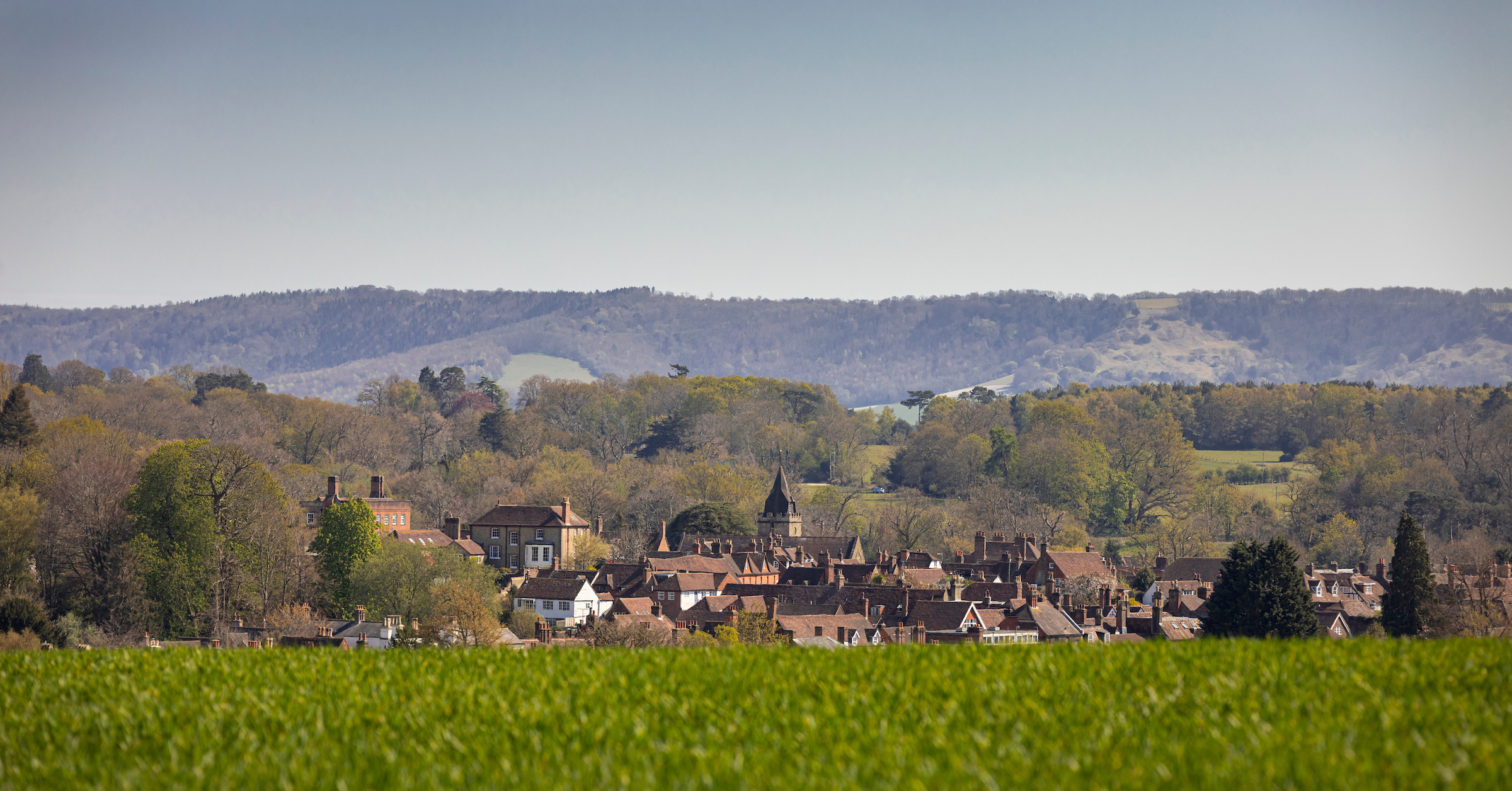


Discover the ancient landscapes, forgotten strongholds and extraordinary stories of Midhurst and the South Downs.
Long before Midhurst became a market town, people were living, travelling and leaving their mark on the hills and valleys of this corner of Sussex.
From Bronze Age burial mounds overlooking the Downs to the remains of a Norman castle above the River Rother, the landscape holds traces of thousands of years of human history. Some are unmistakable; others are little more than earthworks beneath the trees.
And wherever history leaves unanswered questions, legends have a habit of taking root.
The Devil’s Jumps — Five Mounds and a Battle of Gods
High on the South Downs near Treyford, five great burial mounds rise from the chalk. Known as the Devil’s Jumps, they are among the most remarkable prehistoric monuments in the area.
The mounds date from the Bronze Age, but their unusual name belongs to a much later story. According to local folklore, the Devil leapt from mound to mound until Thor, the thunder god, drove him away with a stone.
It’s an extraordinary meeting of prehistoric archaeology and ancient mythology — and a reminder that people have been inventing explanations for mysterious places for centuries.
St Ann’s Hill — The Ancient Heart of Midhurst
Just above Midhurst town centre, St Ann’s Hill offers a glimpse into the town’s earliest medieval history.
Here stood Midhurst’s Norman castle, overlooking the River Rother and the routes through the surrounding countryside. Today, the castle buildings have vanished, but the surviving earthworks offer clues to the hill’s former importance.
Over time, other stories have gathered around this atmospheric place, including traditions associating the hill with seasonal celebrations and the arrival of spring.
A short walk from the town centre takes you into a landscape where history, archaeology and folklore meet.
Explore the secrets of St Ann’s Hill
Cowdray — A Tudor Palace and an Ancient Curse
The ruins of Cowdray House are among Midhurst’s most recognisable landmarks. Once one of Tudor England’s great houses, Cowdray welcomed some of the most powerful figures of its age.
Its history is dramatic enough without embellishment. Yet the ruins are also bound up with a legend of a curse, supposedly pronounced following the upheavals of the Dissolution of the Monasteries.
When fire devastated Cowdray in 1793, the old story acquired a new and unsettling significance.
The tale offers a fascinating glimpse of how real historical events can become intertwined with local folklore.
Verdley Castle — A Forgotten Stronghold in the Woods
Hidden among the wooded hills near Fernhurst are the remains of Verdley Castle, a medieval site whose surviving earthworks hint at a very different landscape centuries ago.
Its history is intriguing, but its folklore is stranger still. The castle has become associated with the extraordinary legend of a ghostly bear, said to haunt the surrounding woodland.
The bear belongs firmly in our collection of ghost stories, but the castle itself is part of the wider story of medieval Sussex.
Discover the legend of Verdley Castle
Explore the Landscape for Yourself
One of the pleasures of visiting Midhurst is discovering how closely the ancient and modern worlds sit together.
A walk from the town centre can take you past medieval remains and Tudor ruins. Venture farther into the South Downs and you’ll encounter prehistoric monuments, old trackways and landscapes shaped by generations of people.
The stories are fascinating, but the places themselves are every bit as rewarding.
Continue exploring: Discover the ghost stories of Mysterious Midhurst, or explore the seasonal customs and traditions that have helped shape life in Sussex.