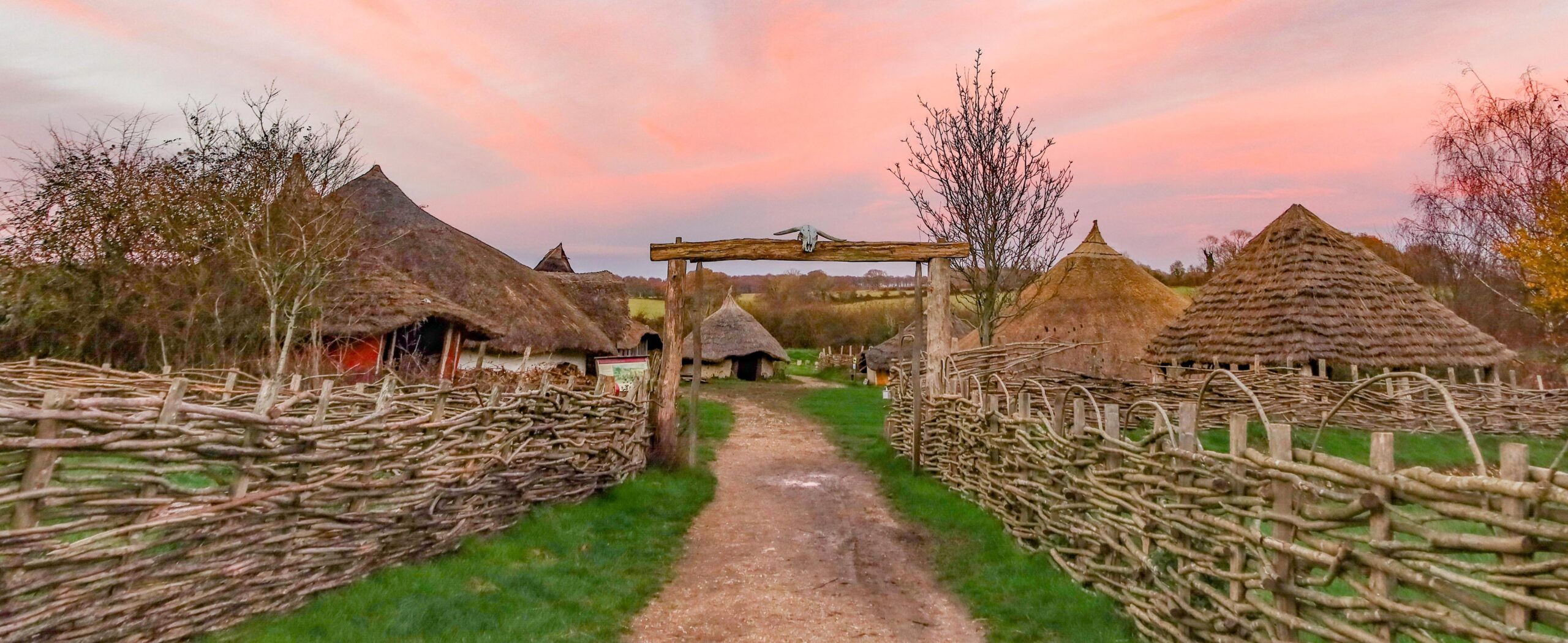


From ancient roundhouses and medieval cottages to Victorian workshops and steam-powered fairgrounds, discover the extraordinary history of ordinary people — all within easy reach of Midhurst.
History isn’t just about kings, queens, battles and grand country houses. It’s also about the people who grew the food, built the homes, made the clothes, worked the land and invented the machines that transformed everyday life.
And around Midhurst, you can do something rather wonderful: step inside their world.
Within a short drive of the town are some of southern England’s most fascinating living-history museums and heritage attractions. Together, they tell a remarkable story stretching from the first farming communities of prehistoric Britain to the arrival of steam power and the modern industrial age.
You can stand inside an Iron Age roundhouse, explore a medieval farmhouse, watch traditional craftspeople at work, discover how an Edwardian family lived and experience the sights and sounds of a steam-powered fairground.
Best of all, these aren’t simply collections of objects behind glass. They’re places where history comes alive.
1. Butser Ancient Farm — Where Our Story Begins
Chalton, Hampshire | Around 25–30 minutes from Midhurst c. 3000 BC – AD 1000
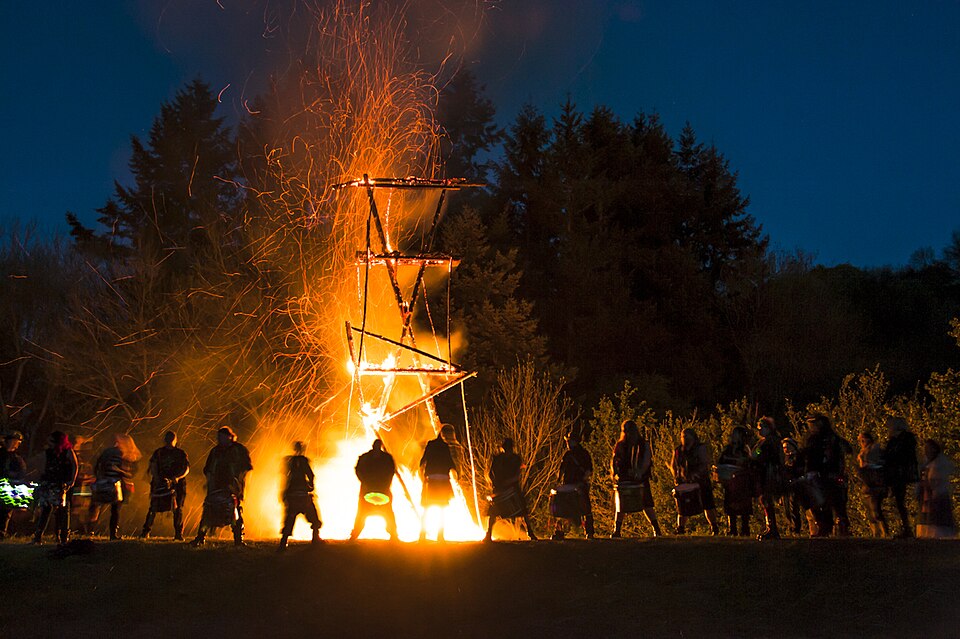
Imagine living in the South Downs thousands of years ago.
No electricity, no supermarkets, no modern machinery. Your home is built from timber, earth and thatch. Your food comes from the crops you grow and the animals you keep. Almost everything you need must be made by hand.
At Butser Ancient Farm, you can discover what that world might have looked and felt like.
Set in the countryside near Chalton, Butser is both a visitor attraction and an internationally recognised centre for experimental archaeology. Its reconstructed buildings are based on archaeological evidence, allowing researchers to test ideas about how our ancestors built their homes, cultivated crops and organised their daily lives.
Wander among prehistoric roundhouses, explore a reconstructed Roman villa and discover Anglo-Saxon buildings inspired by excavations from the surrounding area.
Butser’s story stretches across thousands of years, from the Stone Age through the Bronze and Iron Ages to Roman and Anglo-Saxon Britain.
And this isn’t simply a place to look at the past. Traditional craft workshops, demonstrations and special events offer opportunities to explore ancient skills for yourself.
Don’t miss: The Iron Age roundhouses, Roman villa and opportunities to discover ancient farming and craft techniques.
Why visit? To understand how people lived before modern technology — and how much ingenuity everyday survival required.
Visit Butser Ancient Farm – if you put it in your SatNav follow the back roads – a far nicer experience!!
Explore with The Midhurst App: Find Butser Ancient Farm in our Explore section, alongside more historic places to discover around Midhurst. Make a day of it by exploring the surrounding countryside.
2. Fishbourne Roman Palace – A Glimpse of Roman Luxury
Historical period: c. AD 75–280
Fishbourne, near Chichester | Approximately 30 minutes from Midhurst
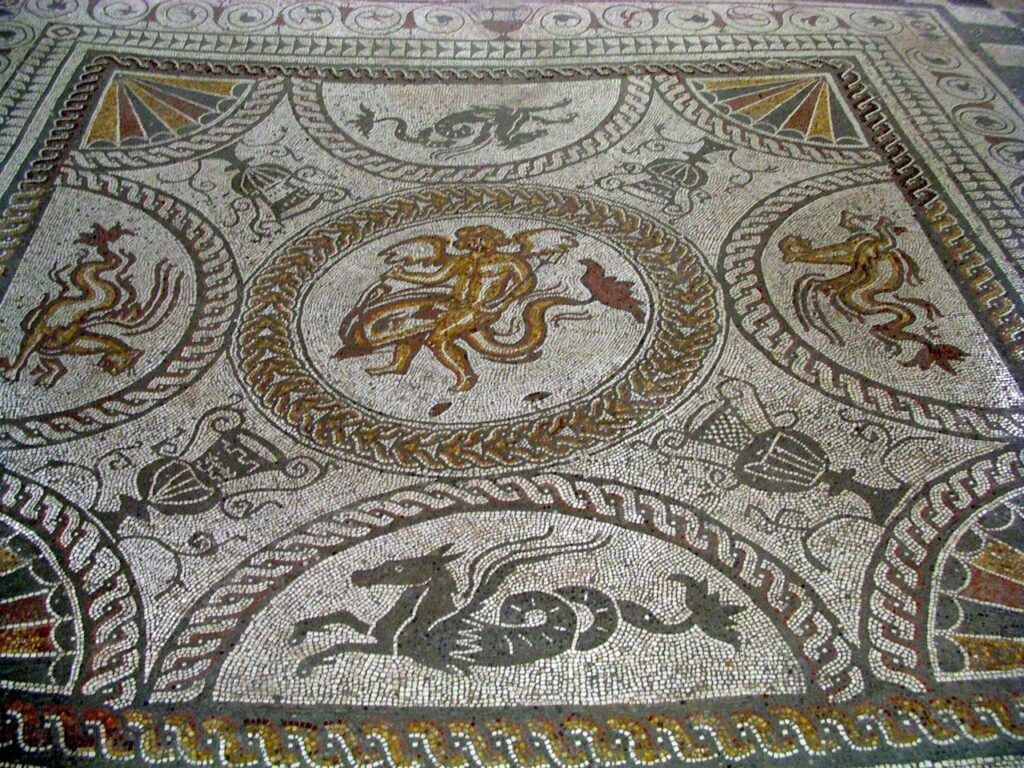
Imagine stepping into a world of magnificent mosaic floors, elegant courtyards, formal gardens and sophisticated Roman comforts — almost 2,000 years ago, in the heart of Sussex.
Built around AD 75, Fishbourne Roman Palace was one of the grandest residences in Roman Britain. Its extraordinary scale suggests an owner of considerable wealth and influence, possibly someone closely connected to the Roman administration of Britain.
Today, visitors can explore the surviving foundations, admire beautiful original mosaics — including the celebrated Cupid on a Dolphin — and wander through reconstructed Roman gardens. The museum reveals how the Romans transformed domestic architecture, introducing elaborate decoration, underfloor heating and new ideas about comfort and luxury.
Yet Fishbourne also raises fascinating questions about the people behind such splendour. Who prepared the food, maintained the gardens and kept this enormous household running? Behind the wealth of Roman society lay the daily work of servants, craftspeople and labourers.
Why visit? To discover the extraordinary sophistication of Roman Britain and imagine life in one of its most remarkable households.
Plan your visit: Fishbourne Roman Palace – Official Website
Explore with The Midhurst App: Find Fishbourne Roman Palace in our Explore section and discover other fascinating Roman sites nearby, including Bignor Roman Villa.
3. Bignor Roman Villa – Life on a Roman Country Estate
Historical period: c. AD 200–400
Bignor, near Sutton | Approximately 25 minutes from Midhurst
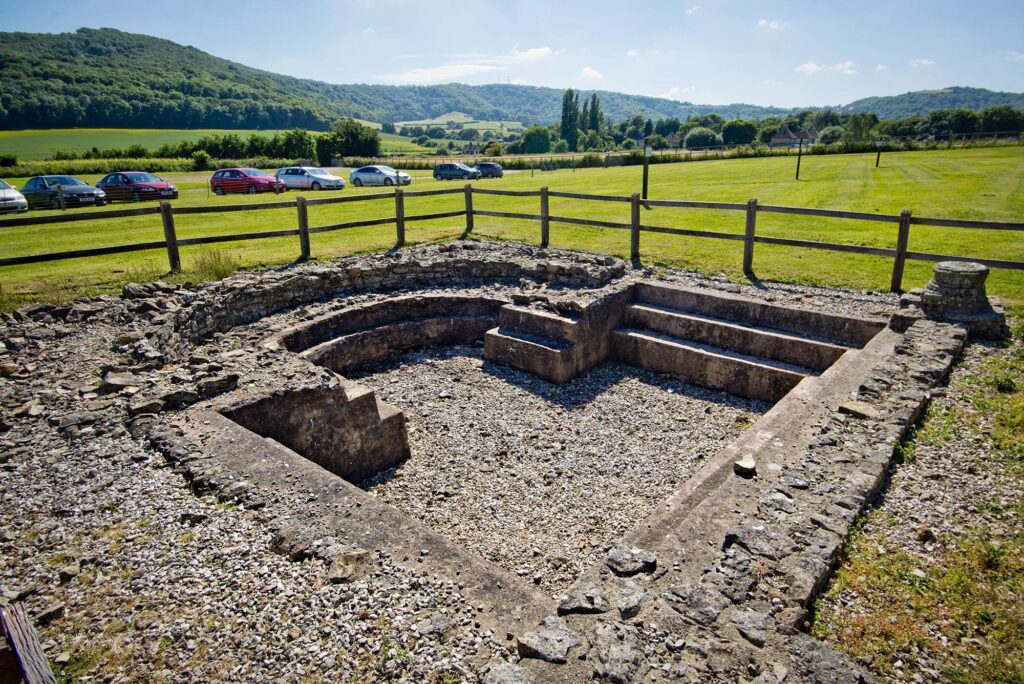
Hidden among the beautiful rolling hills of the South Downs lies one of Britain’s most remarkable surviving Roman country houses — a place where farming, family life and Roman civilisation came together nearly 2,000 years ago.
Bignor Roman Villa began as a relatively modest residence around AD 200 before developing into an extensive and luxurious country estate. Its wealthy occupants enjoyed beautifully decorated rooms, underfloor heating and magnificent mosaic floors, while the surrounding land supported the agricultural activities upon which the household depended.
The mosaics are the great attraction today. Still lying where Roman craftsmen originally laid them, their intricate patterns and colourful mythological scenes offer an astonishingly direct connection with the people who once walked these rooms.
But Bignor is more than a story of wealth. Like other Roman rural estates, it would have depended on a wider community of agricultural workers, servants and craftspeople whose labour sustained its comfortable lifestyle.
There is another delightful historical connection: the villa was rediscovered in 1811 when local farmer George Tupper struck Roman remains with his plough. His descendants remain closely associated with the site more than two centuries later.
Why visit? To discover how Roman civilisation took root in the Sussex countryside, combining sophisticated domestic comforts with the practical realities of farming and rural life.
Plan your visit: Bignor Roman Villa – Official Website. The villa opens seasonally, so check dates before travelling.
Explore with The Midhurst App: Find Bignor Roman Villa in our Explore section and discover more of the South Downs’ Roman heritage. Why not combine your visit with a walk through the beautiful countryside around Bignor?
Two Roman Worlds, One Sussex Landscape
Together, Fishbourne and Bignor offer a fascinating contrast. Fishbourne reveals the grandeur and ambition of Roman Britain’s elite, while Bignor demonstrates how Roman culture became established in the agricultural landscape of the South Downs.
Both remind us that the Romans did not simply march through Sussex and disappear. For centuries, people here lived, worked, farmed, entertained and raised families in a world shaped by Roman ideas and traditions.
4. Weald & Downland Living Museum — Life in the Sussex Countryside
Singleton, West Sussex | Around 15 minutes from Midhurst c. AD 950 – 1900
Move forward through the centuries and a different world begins to emerge.
Villages develop, farms become established, trades flourish and the timber-framed buildings we now associate with historic Sussex take shape.
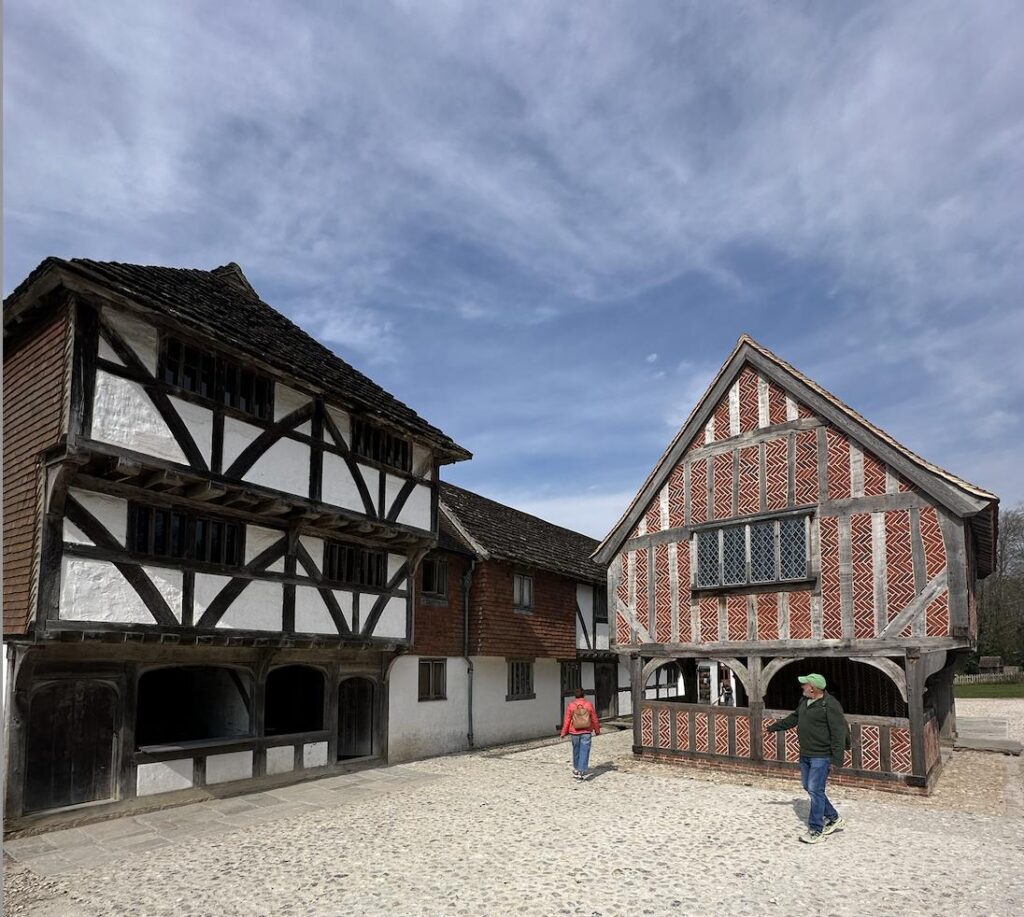
At the Weald & Downland Living Museum, just south of Midhurst at Singleton, that world has been painstakingly preserved.
Spread across 40 acres of beautiful downland countryside, the museum is home to more than 50 historic buildings, many carefully dismantled from their original locations and reconstructed here.
Step inside old farmhouses and cottages. Explore barns, workshops and traditional gardens. Discover how people cooked, worked, raised families and managed their homes before the conveniences we take for granted.
There’s something particularly appealing about seeing the buildings in a living landscape rather than as isolated museum exhibits. A farmhouse makes more sense when you can see its barns, gardens, animals and surrounding fields.
Traditional crafts and rural skills are an important part of the experience. Depending on the day’s programme, visitors may encounter demonstrations and activities that bring historic trades and agricultural practices to life.
The museum also celebrates the changing seasons, with events that explore the rhythms of the old rural year.
Don’t miss: The historic houses, working buildings, traditional gardens and seasonal craft demonstrations.
Why visit? To discover how generations of Sussex families lived and worked, and how their homes and customs developed over the centuries.
Visit the Weald & Downland Living Museum
See forthcoming events and demonstrations
Explore with The Midhurst App: Find the Weald & Downland Living Museum in our Explore section, along with nearby places to visit and ideas for exploring the countryside around Singleton.
5. Amberley Museum — The Ingenuity of Sussex Industry c. AD 19th–20th centuries
Amberley, West Sussex | Around 30–35 minutes from Midhurst
For centuries, much of life in the South Downs revolved around farming and traditional village trades.
But the landscape also supplied the raw materials for industries that helped build modern Britain.
Chalk, clay, timber and other natural resources supported a remarkable range of local crafts, workshops and industrial enterprises.
At Amberley Museum, you can discover this less familiar side of Sussex history.
The museum occupies a former chalk quarry and limeworks, where chalk was once extracted and processed to produce lime for building and agricultural use.
Today, the old industrial landscape has become a fascinating open-air museum celebrating the skills, machinery and ingenuity of the people who worked here and across the region.
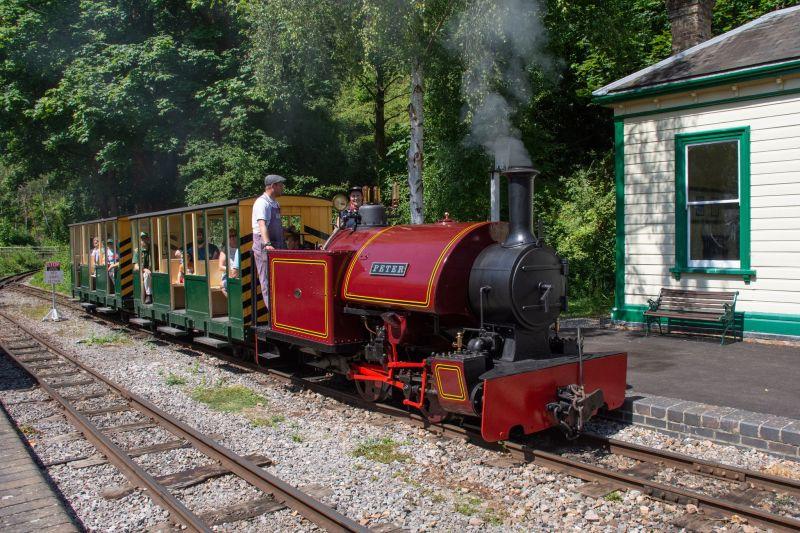
Explore traditional workshops, historic machinery and displays devoted to printing, communications, transport and rural crafts. You can also discover the museum’s narrow-gauge railway and historic buses.
One of Amberley’s great pleasures is meeting the knowledgeable volunteers who keep traditional skills and machinery alive. Their demonstrations reveal just how much craftsmanship and practical knowledge once went into everyday objects and essential services.
Don’t miss: The traditional craft workshops, historic printing equipment, industrial railway and old chalkworks.
Why visit? To discover the working history of Sussex — and the craftspeople, engineers and industries that transformed the region.
Visit Amberley Museum – Take time to explore the beautiful Town of Amberley as well!
Explore with The Midhurst App: Find Amberley Museum in our Explore section, then explore the picturesque village of Amberley and the surrounding South Downs.
6. Petworth Cottage Museum — A Glimpse of Life in 1910
Petworth, West Sussex | Around 15 minutes from Midhurst
History doesn’t always need a grand setting.
Sometimes an ordinary little house can tell us more about the past than a palace.
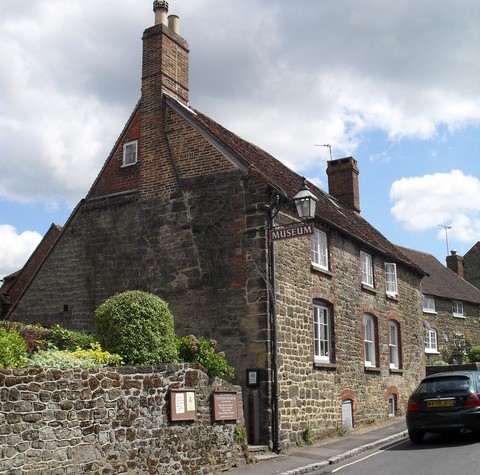
Tucked away in Petworth, Petworth Cottage Museum offers an intimate glimpse into the everyday life of an estate worker’s family in the early twentieth century.
The cottage is presented as a home around 1910, complete with period furnishings and domestic details.
It’s a world that feels surprisingly close to our own, yet so different.
The rooms are modest, the household possessions practical and the comforts limited. Daily life involved a great deal of physical work, particularly for those responsible for cooking, cleaning, washing and keeping the home running.
Yet there is also warmth and familiarity in these spaces. You can easily imagine the conversations around the table, the smell of cooking and the routines of family life.
The contrast with nearby Petworth House, one of England’s great country houses, is particularly striking.
Together, they reveal two very different experiences of life in the same community.
Don’t miss: The period kitchen, domestic furnishings and small details of everyday Edwardian life.
Why visit? To discover what life was really like for an ordinary working family little more than a century ago.
Find out about Petworth Cottage Museum
Explore with The Midhurst App: Find Petworth Cottage Museum in our Explore section, together with other historic places, independent shops and places to eat in and around Petworth.
7. Hollycombe — When Steam Changed Everything
Near Liphook, Hampshire | Around 15–20 minutes from Midhurst 1850–1930
By the nineteenth century, the world was changing rapidly.
Steam power transformed transport, manufacturing and agriculture. Machines began to take on work that had previously depended on human and animal labour.
But steam didn’t just change the way people worked. It also transformed how they travelled, entertained themselves and enjoyed their leisure time.
At Hollycombe Steam in the Country, near Liphook, you can experience something of that extraordinary age.
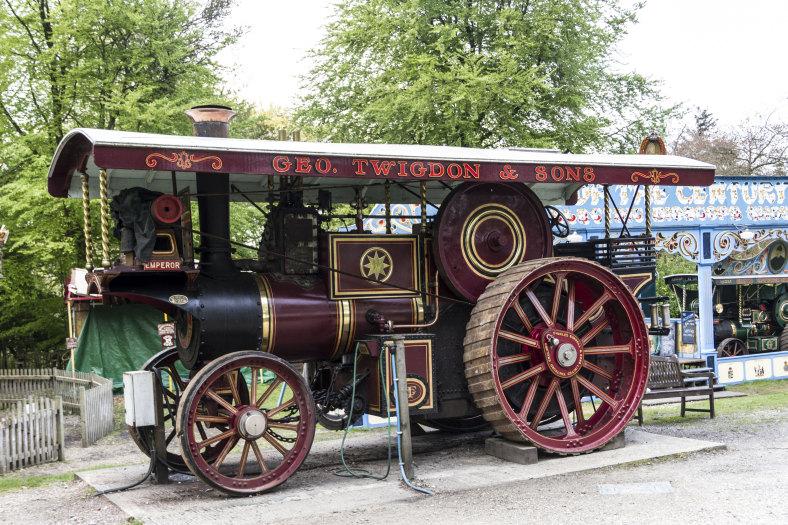
This volunteer-run heritage attraction brings together working steam-powered machinery, historic railways and traditional fairground rides in a beautiful woodland setting.
Unlike a conventional museum, Hollycombe is at its best when the machinery is operating.
The sounds, smells and movement of steam engines create an atmosphere that photographs and static displays can never quite capture.
Its historic fairground is especially evocative, offering a glimpse of the excitement that mechanical rides once brought to Victorian and Edwardian visitors.
And beyond the entertainment lies a bigger story: the arrival of machines that fundamentally changed the relationship between people, work and the countryside.
Don’t miss: The steam-powered fairground rides, historic railways and working engines.
Why visit? To experience the energy, excitement and mechanical ingenuity of the steam age.
Hollycombe operates on selected opening days, so check its programme before travelling.
Visit Hollycombe Steam in the Country – you’ll love the windy roads to get there 🙂
Explore with The Midhurst App: Find Hollycombe Steam in the Country in our Explore section, and discover more places to visit across the beautiful countryside surrounding Midhurst.
Make Midhurst Your Base for Exploring
One of the pleasures of exploring this part of the South Downs is that you don’t have to travel far to discover something completely different.
Stay in or around Midhurst and you can spend one day exploring prehistoric Britain, another discovering historic Sussex farmhouses and another watching traditional machinery at work.
Between visits, return to Midhurst to explore its historic streets, independent shops, welcoming pubs and cafés.
The town has plenty of history of its own, from medieval buildings and the ruins of Cowdray House to ancient routes across the surrounding countryside.
You can also explore more local stories through our Ancient Midhurst collection, or discover seasonal customs and celebrations in our Customs, Rituals & Living Traditions feature.
For places to explore, suggested walks and somewhere good to eat afterwards, take a look at The Midhurst App.
A Little Local Knowledge Goes a Long Way
Museums preserve buildings, objects and traditions, but some of the best stories are still carried by the people who live here.
Ask a museum volunteer about an old trade. Chat to someone in a village pub about how the area has changed. Strike up a conversation with a local shopkeeper about the town’s past.
You might discover something that never made it into a history book.
After all, the history of the South Downs isn’t just something to look at.
It’s something to experience, explore and share.
Photograph Credits and Acknowledgements
We are grateful to the photographers and contributors whose images help bring the history of the South Downs to life. The photographs listed below are credited to their respective creators and are used under Creative Commons licences.
Butser Ancient Farm — Hero Image
Two Roundhouses, photograph by Rob Farrow.
Original photograph · CC BY-SA 2.0 licence

Butser Ancient Farm — Beltain Fire Festival
Beltain Wickerman Bonfire with Drummers, credited to Butser Ancient Farm.
Original photograph · CC BY-SA 4.0 licence

Fishbourne Roman Palace
The Cupid on Dolphin Mosaic (detail), photograph by Michael Garlick.
Original photograph · CC BY-SA 2.0 licence

Bignor Roman Villa
A Scorching Visit to Bignor Roman Villa (1), photograph by Basher Eyre.
Original photograph · CC BY-SA 2.0 licence

Weald & Downland Living Museum
Photograph by Michael Dibb.
Original photograph · CC BY-SA 2.0 licence

Amberley Museum
Photograph by Peter Trimming.
Original photograph · CC BY-SA 2.0 licence

Hollycombe Steam in the Country
Photograph by Peter Trimming.
Original photograph · CC BY-SA 2.0 licence

Petworth Cottage Museum
Cottage Museum, Petworth, photograph by Basher Eyre. Cropped
Original photograph · CC BY-SA 2.0 licence

We thank these photographers and the Wikimedia Commons community for making images of our historic landscapes, buildings and attractions available for others to enjoy.