

Long before Christmas television, pantomimes and organised festive entertainment, the villages around Midhurst had their own unusual seasonal tradition. Groups of amateur actors travelled from house to house, performing extraordinary tales of sword fights, death and miraculous resurrection. They were the Sussex Tipteerers, and their forgotten Christmas plays were once part of village life.
When Christmas Came Knocking
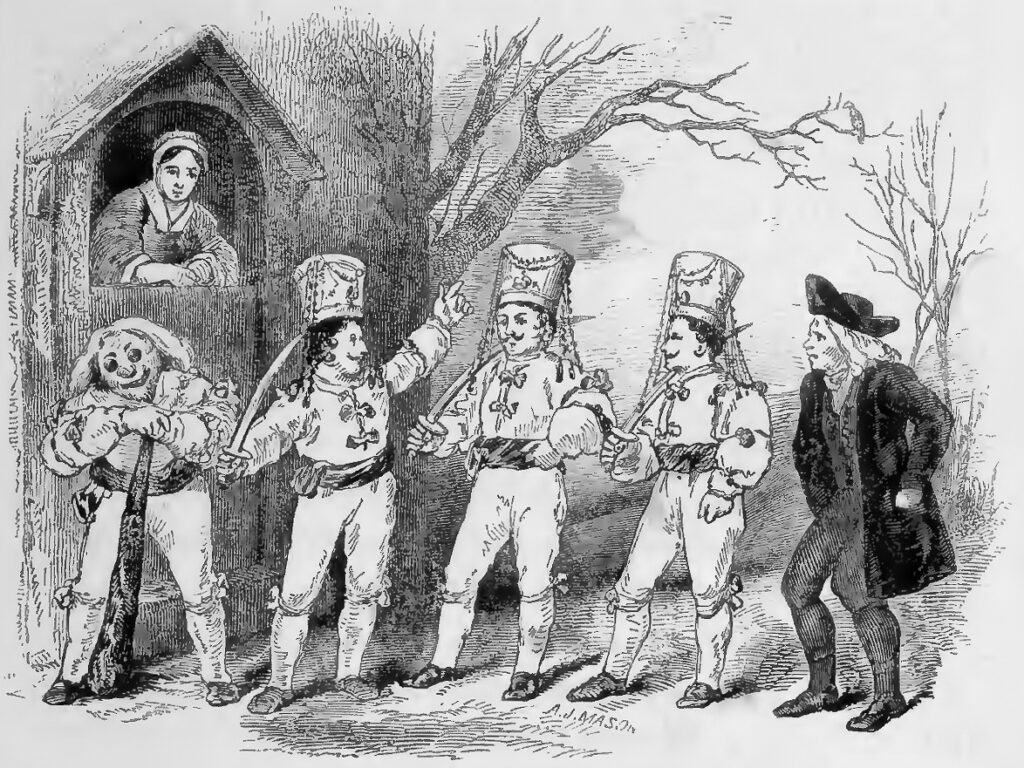
Imagine a cold December evening in a Sussex village more than a century ago. A knock comes at the door. Outside stands a peculiar company of characters, dressed in makeshift costumes and carrying wooden swords. There is Father Christmas, a boastful warrior, perhaps St George himself, and a mysterious doctor capable of bringing the dead back to life. The visitors are not simply carol singers. They have come to perform a play.
For generations, Sussex communities maintained a tradition of seasonal folk theatre known as tipteering, a local form of the English mummers’ play. These performances brought entertainment, humour and a little festive disorder into the darkest days of the year.
A Forgotten Tradition Around Midhurst
The Tipteerers were not confined to distant parts of Sussex.
Historical records connect the tradition to Cocking, Iping and Chithurst, villages in the countryside around Midhurst. One particularly evocative account comes from Cocking. Published by R. J. E. Tiddy in The Mummers’ Play in 1923, it preserves a traditional Tipteerers’ performance supplied by a local resident.
The contributor described how their brothers had performed the play as boys, having learned it through earlier generations of the family. Their grandmother had taught the older brothers and remembered hearing the tradition herself when she was young. This was not theatre performed by professional actors. It was a custom passed from generation to generation within a Sussex village.
The surviving account suggests that the Cocking performances continued into the early years of the twentieth century before eventually dying out.
St George, the Doctor and the Miracle of Resurrection
The plays varied from village to village, but many shared familiar ingredients. Father Christmas frequently introduced the performers and welcomed the audience into the story. A courageous warrior would challenge an opponent. There would be insults, exaggerated threats and a dramatic sword fight. Someone would fall, apparently dead. Then came the doctor. With comic boasts about his extraordinary medical abilities, he would attempt to restore the fallen character to life. The inevitable resurrection brought the performance towards its conclusion, often followed by an appeal for money.
The surviving Cocking play includes characters called Father Christmas, Mince Pie, St George, the Doctor and Little Saucy Jack. It is a wonderfully eccentric mixture of heroism, comedy and Christmas celebration.
Why Were These Plays Performed?
The Tipteerers formed part of a much wider English tradition of seasonal folk drama.
Their performances combined familiar stories, comic improvisation and the opportunity for performers to collect small rewards from their audiences. The recurring themes of death and resurrection have sometimes encouraged interpretations connecting mummers’ plays to ancient seasonal rituals and the renewal of life. However, such interpretations remain debated. There is no reliable evidence establishing that the Sussex Tipteerers’ plays originated directly in pagan ceremonies. What we do know is that the performances formed part of the Christmas customs of Sussex communities during the nineteenth and early twentieth centuries.
For villagers, they offered entertainment and a chance to participate in a shared local tradition.
A Christmas Custom That Almost Disappeared
By the twentieth century, changing patterns of entertainment and village life were transforming traditional Christmas celebrations. Many local performances ceased, although some survived through written records, family memories and later revivals. Fortunately, folklore collectors recognised the importance of preserving these unusual plays. Their work means that we can still read versions performed in Sussex more than a century ago, including the remarkable example from Cocking. Across Sussex, enthusiasts have also revived versions of the traditional mummers’ play, keeping elements of this colourful heritage alive.
Rediscovering Christmas in the South Downs
Today, Cocking, Iping and Chithurst are peaceful villages set among the landscapes surrounding Midhurst. Yet their history contains echoes of a much noisier Christmas past. Picture the performers making their way through winter darkness, stopping at houses to announce their arrival, brandish wooden swords and entertain their neighbours. The Sussex Tipteerers remind us that local folklore is not simply about ghosts, curses and mysterious places. It is also about the customs that brought communities together, the stories passed between generations and the traditions that once marked the turning of the year.
Perhaps the most remarkable thing about the Tipteerers is that, although the performances largely disappeared from everyday village life, their words have survived!
And through those words, a little of Christmas past can still be heard in the villages around Midhurst.
Explore Cocking and the South Downs
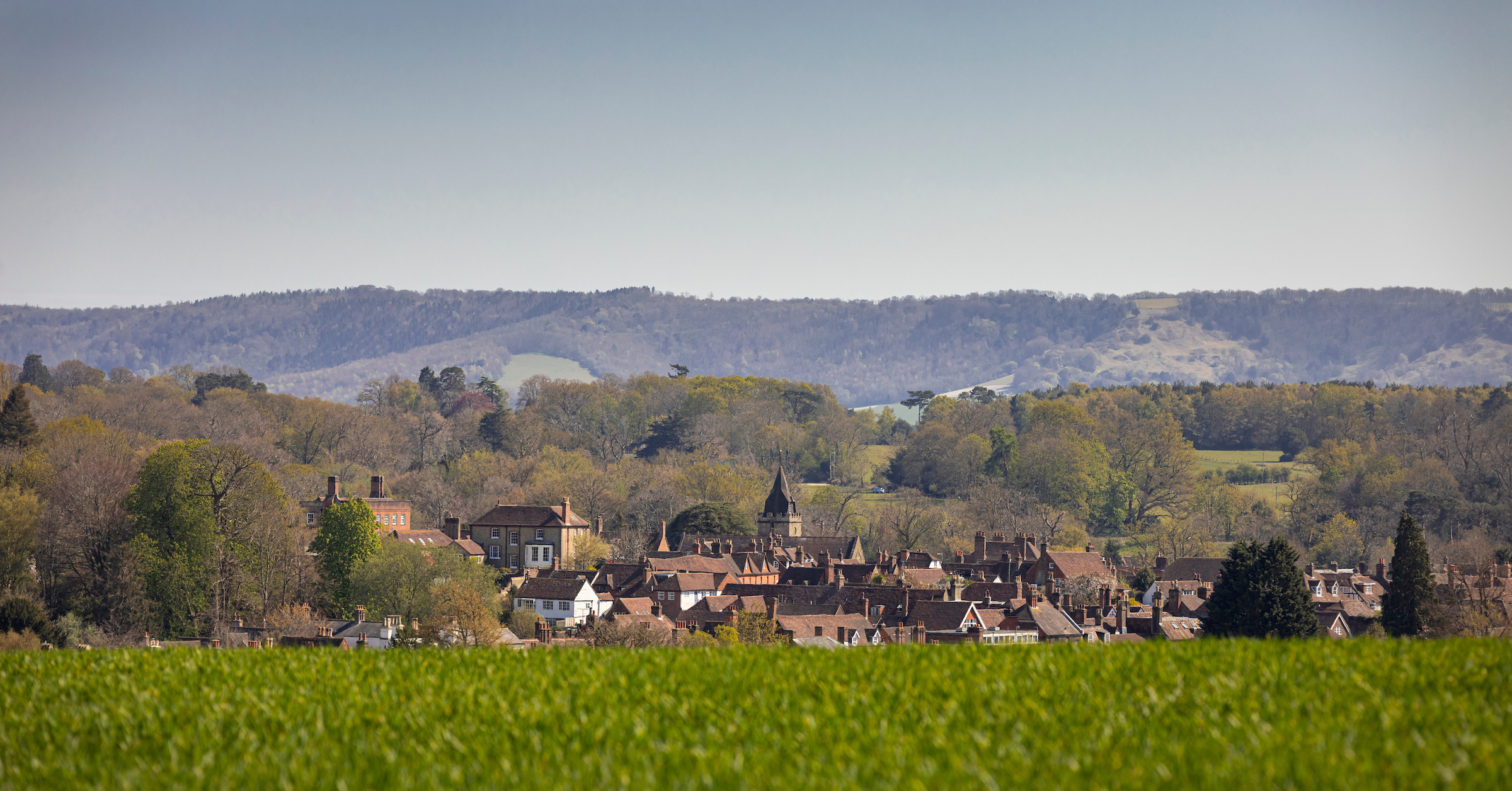
Just three miles south of Midhurst, the picturesque village of Cocking lies beneath the rolling hills of the South Downs. It was here that the Sussex Tipteerers once performed their extraordinary Christmas plays, a tradition remembered by local families and passed down through generations.
Although the precise locations of these performances are unknown, Cocking is well worth exploring. Discover its historic church, wander through the village and enjoy the beautiful countryside that surrounds it. While you’re there, stop at the community-owned Blue Bell for refreshments — a fitting place to experience the village community spirit that once sustained traditions like the Tipteerers.
Take a walk on the South Downs Way
Cocking is an excellent starting point for exploring one of England’s finest National Trails. From Cocking Hill, where the South Downs Way crosses the A286, you have two particularly appealing options:
- Head west along the South Downs Way, climbing into the beautiful chalk downland. Before or after your walk, stop for coffee or something to eat at Cadence Clubhouse, close to the trail crossing.
- Head east towards Heyshott Down, where magnificent views open northwards across the Rother Valley and the wooded hills beyond. Near the start of your walk, you can visit the Farm Shop at Manor Farm for local produce and refreshments.
Whether you’re planning a leisurely village visit or a longer adventure across the Downs, Cocking makes a lovely excursion from Midhurst.
Getting to Cocking from Midhurst
By car: Cocking is approximately three miles south of Midhurst along the A286, around a 5–10 minute drive.
By bus: The Stagecoach number 60 connects Midhurst Bus Station with Cocking village, with a journey time of approximately 14 minutes. The service also serves Cocking Hill, providing access to the South Downs Way. Check the latest timetable before travelling, particularly for return journeys.
Parking: A small free public car park is available at Cocking Hill, where the South Downs Way crosses the A286, approximately a mile south of the village centre. Spaces can be limited at busy times, and care is needed when crossing the main road. Parking within the village itself is limited.
Walking: Cocking village and the South Downs Way crossing are separate starting points. If you’re planning to explore the hilltop trails, allow additional time to reach the trail from the village. Wear suitable footwear and check the weather before setting out.
Take the Midhurst App With You
Plan your visit using Visit Midhurst, then let the Midhurst App be your companion as you explore.
Once you’re in Cocking, use the app to discover nearby attractions, find somewhere for refreshments, explore local places of interest and see what else is happening around Midhurst.
Explore Cocking and the surrounding area with the Midhurst App