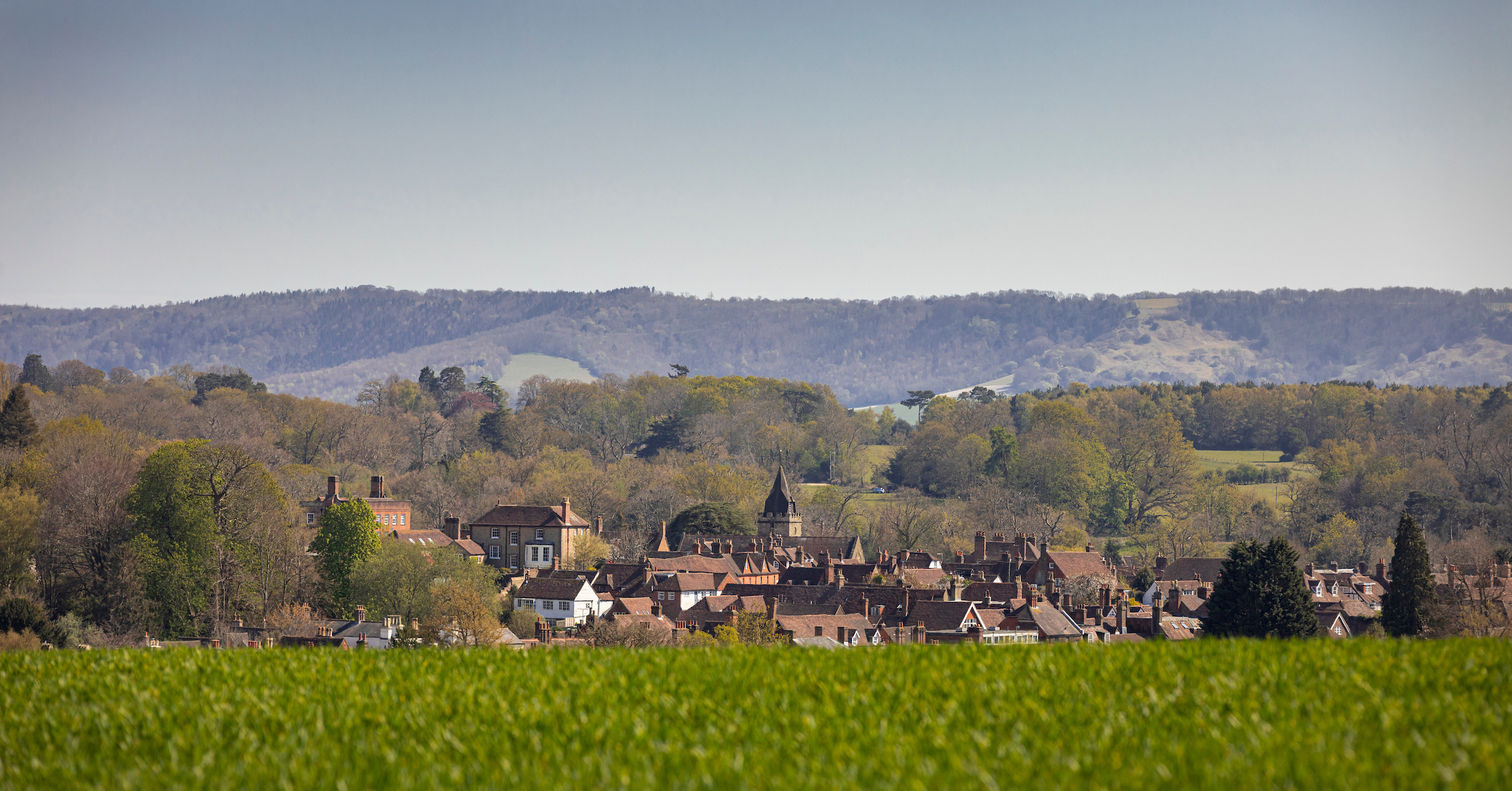


Fast, beautiful, skilled and glamorous; your complete guide to watching polo, visiting Cowdray Park and discovering one of Britain’s great sporting traditions.

Midhurst, nestled in the heart of the South Downs National Park, is home to one of the most celebrated polo clubs in the world. For more than a century, Cowdray Park has welcomed players and spectators to enjoy a sport that combines extraordinary horsemanship, speed, skill and teamwork.
Whether you are a lifelong polo enthusiast or have never watched a match, a visit to Cowdray offers a wonderful opportunity to experience the sport in beautiful West Sussex countryside.
You don’t need to be a member of a polo club, understand all the rules or attend a major tournament to enjoy a day watching polo. Many matches are open to the public, and there are opportunities to learn to play yourself.
This guide covers everything you need to plan your visit, from choosing a match and finding the right playing ground to understanding the game, exploring its history and making the most of your time in Midhurst.
Plan Your Polo Visit
Everything you need to arrange your day at Cowdray Park.
1. When can you watch polo?
The outdoor polo season at Cowdray generally runs from spring until early autumn, with matches taking place throughout the summer.
The club hosts a busy programme of competitions, ranging from everyday club polo to major international tournaments. Matches can take place on weekdays as well as weekends, so visitors do not necessarily need to plan their trip around a major event.
There are three particularly good ways to experience polo at Cowdray.
Everyday club polo
A relaxed introduction to the sport, with opportunities to watch competitive matches without the crowds and ceremony of a major tournament. Bring a picnic, find a suitable viewing spot and enjoy the action.

The Midhurst Town Cup
A community-focused polo event combining high-level competition with family entertainment, countryside activities, food, drink and shopping. An enjoyable introduction for visitors who want to experience more than just the match itself.

The Cowdray Gold Cup
The highlight of the local polo calendar, bringing leading international players and teams to Cowdray for the British Open Polo Championship. The semi-finals and final are major sporting and social occasions, with additional hospitality and entertainment.
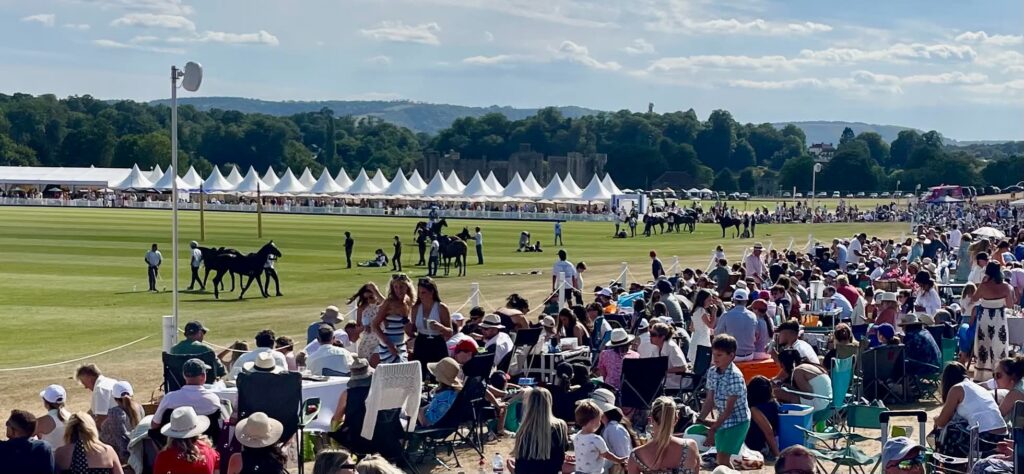
Finding out what is on
The most reliable way to plan your visit is to consult Cowdray Park Polo Club’s official website. Check which matches are taking place, their starting times and the grounds being used on the Daily Play site.
Daily Play and Match Locations
Tournaments and Major Events
Tickets and admission
Match times and locations can change, particularly when weather affects the condition of the playing grounds. Check the daily programme before setting off, even if you have already booked tickets.
2. Where is polo played? Finding the right venue
Cowdray Visitor Information
Cowdray Park Polo Club uses several playing grounds around Midhurst. These are not all in the same place, so it is important to check which ground is hosting your chosen match.
The club’s two principal groups of grounds are the Lawns and River grounds, and the Ambersham and Brooks grounds.
The Lawns and River Grounds
Major tournaments and regular polo
The Lawns are Cowdray’s best-known playing grounds, situated close to the historic Cowdray Ruins, on the outskirts of Midhurst.
They provide a memorable setting for watching polo, with the ruins and surrounding South Downs countryside forming the backdrop.
The Lawns host the Gold Cup final and other important matches, as well as regular polo throughout the season. The nearby River grounds are also used for competitions.
Individual pitches are identified by names or numbers in the club’s playing schedule.
Finding the grounds
Use the official ground map and the access instructions for your particular match rather than relying on the club’s general office address.
Official grounds maps and access information
Ambersham and Brooks Grounds

Regular club polo and tournaments
Ambersham is another important centre of polo at Cowdray, situated in the countryside to the east of Midhurst.
The grounds contain several numbered playing fields and host a substantial part of the club’s programme, including everyday matches and tournament fixtures.
The Ambersham Clubhouse provides a place to enjoy food and refreshments on match days.
Finding the grounds
Check the official playing schedule and ground map for the correct entrance and parking arrangements.
Official Ambersham and Brooks grounds map
Important: The club’s office address is not necessarily the correct destination for your match.
Always check the ground and entrance details before travelling.
3. Parking and getting to the grounds
Arriving by car
Parking is provided at Cowdray’s polo grounds, although the arrangements depend on the match and venue.
For ordinary club matches, visitors should follow the signs and any instructions from club staff to the designated parking areas.
For major events, such as the Gold Cup final, there may be separate parking areas for general spectators, members, hospitality guests and other authorised vehicles.
Check whether parking is included in your ticket and whether you need to display a parking pass.
The club publishes maps and access information for its grounds, while major events may have their own site plans and arrival instructions.
Cowdray Polo – Ground maps, access and visitor information
Travelling without a car
Midhurst does not have its own railway station. Visitors travelling by public transport can reach the town by bus from surrounding areas, including Chichester and Haslemere.
If you are travelling to a polo match without a car, plan the final part of your journey carefully. Some playing grounds are outside the town centre, and the routes to them may involve rural roads without suitable pedestrian access.
A pre-booked taxi may be a more practical option for some venues, don’t assume taxi are available in Midhurst it is a small town.
More Details on Travel
Can you walk from Midhurst?
The Lawns are very close to the town, but Ambersham is further into the countryside.
If you intend to walk or cycle, check the official access map and contact the club for advice about safe pedestrian or cycle access.
4. Tickets, admission and what to expect

One of the attractions of polo at Cowdray is the variety of ways to enjoy it.
An ordinary club match can be a relatively informal experience, while a major tournament final may offer grandstand seating, dedicated spectator enclosures, food stalls, bars and hospitality packages.
You do not need to be a club member to attend public matches.
Admission charges and ticketing arrangements vary by fixture. Some matches may be free to attend, while others require paid admission or advance booking.
For major events, it is sensible to book ahead, particularly if you want a particular seating or hospitality option.
What should you bring?
For an ordinary outdoor match, consider bringing a picnic rug or folding chair, suitable footwear for walking on grass, sunscreen and a waterproof jacket.
Polo is played outdoors, and conditions can change during the course of an afternoon.
There is no need to dress formally for an ordinary club match. For major events, some visitors choose to dress up, but practical clothing and comfortable footwear are still worth considering.
Can you bring a picnic?
Picnicking is a traditional part of the polo experience, and visitors can often enjoy their own food while watching the game.
However, individual events and hospitality areas may have different rules about bringing food and drink.
Private barbecues are not permitted at Cowdray.
5. Food, drink and hospitality
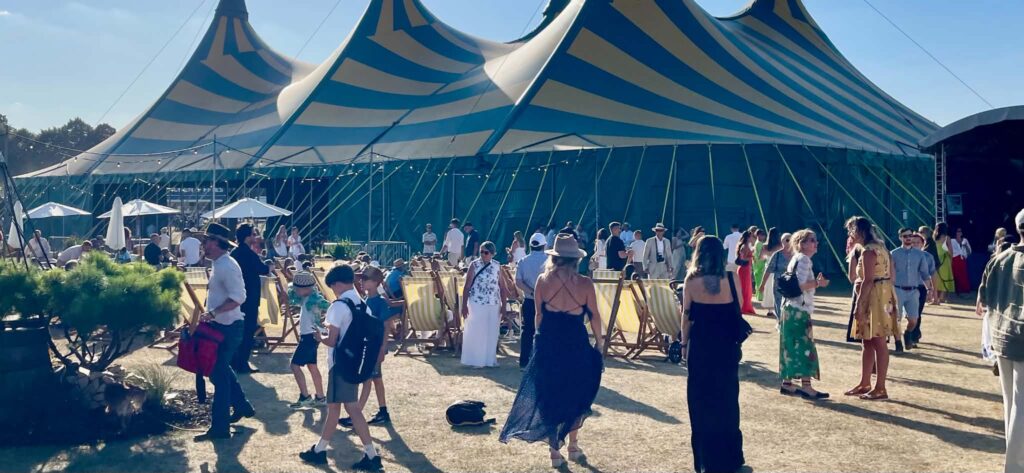
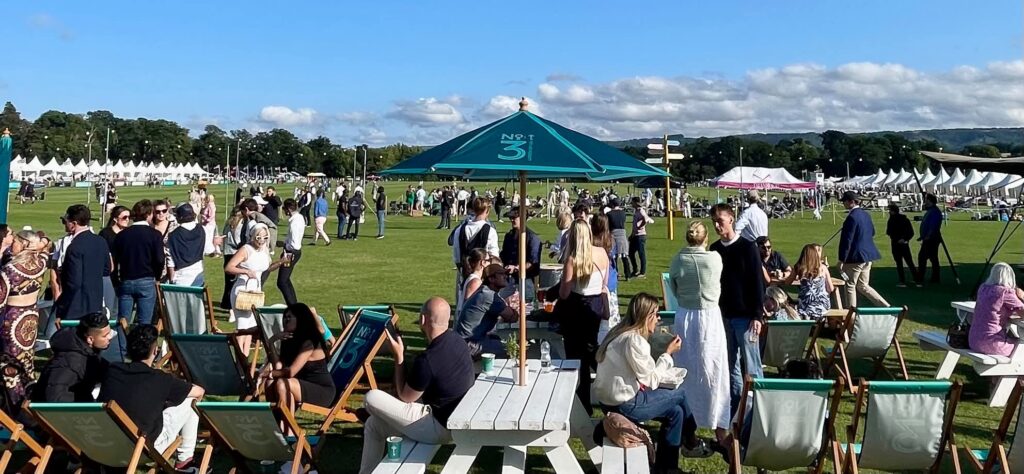
There are several ways to enjoy food and drink during a visit to Cowdray, from bringing your own picnic to booking a catered hospitality experience.
The Clubhouse
Cowdray’s Clubhouse facilities provide a place to meet, eat and relax during the polo season.
The Ambersham Clubhouse serves food and refreshments on match days, with additional catering available at other grounds according to the event.
Check the club’s website for current opening arrangements and dining information.
The Clubhouse – Food and dining information
The Lawns Enclosure
During selected major Gold Cup fixtures, the Lawns Enclosure offers a dedicated area for enjoying the polo alongside food, drinks and entertainment.
It provides a more social, event-style experience, with facilities and admission arrangements determined by the particular fixture.
Private and corporate hospitality
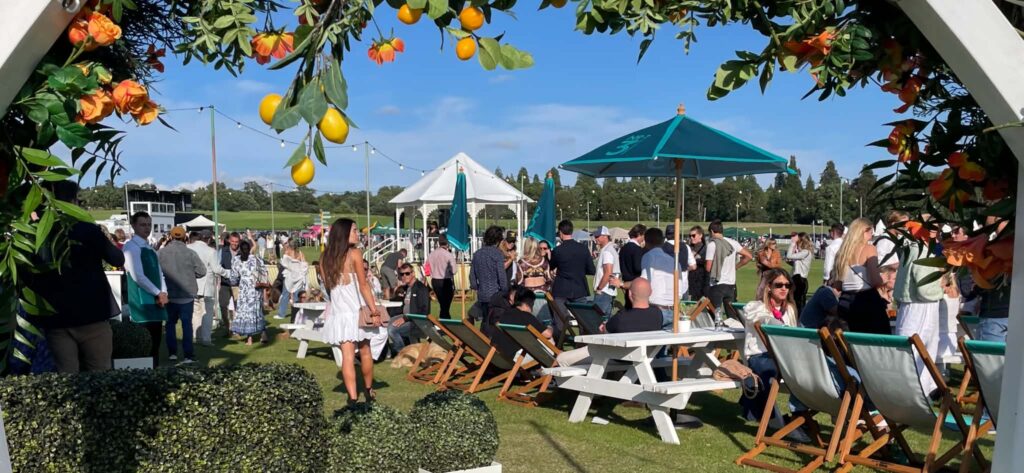
Cowdray also offers hospitality packages for selected major matches. Depending on the event, these may include reserved viewing areas, dining, private enclosures and dedicated parking arrangements.Cowdray Polo – Hospitality options
If you would prefer to eat before or after the match, Midhurst has a range of pubs, cafés and restaurants, making it easy to combine a day at the polo with a visit to the town.
6. Understanding polo: a beginner’s guide
Polo is a fast-moving team sport played on horseback. Although the action can initially seem difficult to follow, the basic objective is straightforward: score more goals than the opposing team.
How does the game work?
Two teams of four players compete to hit a small, hard ball through the goalposts at opposite ends of a large grass field.
Players use long-handled mallets to strike the ball while riding at speed. A goal counts as one point, regardless of the distance from which it is scored.
After each goal, the teams change ends and play resumes from the centre of the field. This helps ensure that neither team enjoys a lasting advantage from the wind, sun or slope of the ground.
The four players
Each player wears a numbered shirt indicating their traditional position.

These are not fixed positions. Players continually move around the field, changing roles according to the direction of play.
How long does a match last?
A polo match is divided into periods called chukkas, each normally lasting seven minutes of playing time.
Matches commonly consist of four or six chukkas, although the number can vary according to the competition.
There are short intervals between chukkas, allowing players to change horses and prepare for the next period.
Why do players keep changing horses?
Polo is physically demanding for both horse and rider. The horses, traditionally called polo ponies despite usually being full-sized horses, are specially trained to accelerate, stop and turn rapidly.
Players generally change horses between chukkas and may also change during a chukka.
Professional players often bring several horses to a match, supported by grooms who prepare and care for them.
The partnership between horse and rider is a fundamental part of the sport.
The most important rule: the line of the ball
If you understand just one rule, make it this one.
Whenever the ball is struck, its path establishes an imaginary line across the field, known as the line of the ball.
This line helps determine which player has the right of way and how other players may approach the ball.
A player following the line will often have the right of way, although this depends on the circumstances. Other players must not cross dangerously into their path.
The line changes whenever the ball is struck in a new direction, so the right of way can change very quickly.
This explains why players sometimes turn away from the ball rather than heading straight towards it. The most direct route is not necessarily a safe or permitted one.
How do players challenge each other?
Riding off
Players may use their horses to make controlled shoulder-to-shoulder contact with an opponent, moving them away from the ball. This is called a ride-off and must be carried out safely.
Hooking
A player may use their mallet to interfere with an opponent’s mallet as the opponent attempts to strike the ball. A successful hook can prevent a shot at goal or interrupt an attack.
What happens when the umpire blows the whistle?
Most outdoor matches are controlled by two mounted umpires.
They watch for dangerous riding, infringements of the right of way, illegal use of the mallet and other breaches of the rules.
When a foul occurs, play is stopped and the opposing team may be awarded a penalty.
Depending on the infringement, a penalty may provide an opportunity to strike the ball towards goal from a specified position or require the team to advance the ball against the defence.
If the whistle blows and you cannot see why, look at how the horses were approaching the ball immediately beforehand. A player may have crossed dangerously into another player’s path without making physical contact.
What is a polo handicap?
Every established polo player is assigned a handicap reflecting their assessed playing ability.
The outdoor handicap scale generally runs from minus two to ten goals, with ten representing the highest level.
Despite the terminology, the handicap is not a record of how many goals a player usually scores. It is an assessment of their overall contribution to the game, including horsemanship, ball skills, tactical awareness and teamwork.
A team’s handicap is calculated by adding together the handicaps of its four players.
Competitions are often organised into handicap categories, bringing together teams of broadly comparable playing strength.
What happens at half-time – treading in the divots?
One of polo’s best-known traditions is treading in the divots.
During play, horses’ hooves can dislodge small pieces of turf. At half-time, spectators are often invited onto the field to replace these divots, helping restore the playing surface.
It is an opportunity to stretch your legs and take part in a longstanding polo tradition.
If spectators are invited onto the field, follow the organisers’ instructions and return to the designated viewing areas before play resumes.
7. The history of polo at Cowdray
Polo has been part of life around Midhurst for more than a century, and Cowdray Park has played an important role in the development of the sport in Britain.
The club was founded in 1910 by the Pearson family, owners of the Cowdray Estate.
By the 1920s, it had developed an established programme of competitions, with its own cups and trophies.
However, the Second World War brought polo at Cowdray, and across much of Britain, almost to a standstill. The playing fields were ploughed as part of the war effort, while the Ambersham grounds were taken over by the Fleet Air Arm.
John Pearson and the revival of British polo
One of the most remarkable figures in Cowdray’s history was John Pearson, the third Viscount Cowdray.
A keen polo player before the war, he lost his left arm during the evacuation of Dunkirk in 1940.
Rather than abandon the sport, he had an artificial arm adapted so that he could hold the reins with a hook, allowing him to continue playing.
After the war, he set about rebuilding polo at Cowdray.
He developed his own string of polo ponies and lent horses to other players, helping them return to the game at a time when suitable horses were difficult to obtain.
His efforts helped revive polo elsewhere in Britain and restore the country’s connections with the international polo community.
In 1949, an English team travelled to Buenos Aires following an invitation from visiting Argentine players, marking an important step in the recovery of British polo.
The Coronation Cup and the birth of the Gold Cup
In 1953, Cowdray hosted the first Coronation Cup, with teams from Britain, the United States, Argentina and Chile competing.
The finals attracted more than 10,000 spectators, including Queen Elizabeth II and the Duke of Edinburgh.
Three years later, in 1956, the Cowdray Gold Cup was inaugurated.
The competition developed into the British Open Polo Championship and remains one of the major events in international polo.
Today, Cowdray’s polo tradition continues to bring players and visitors from around the world to Midhurst, while supporting a wider local network of polo yards, grooms, trainers and equestrian businesses.
8. The Cowdray Gold Cup
The British Open Polo Championship for the Cowdray Gold Cup is the highlight of the Cowdray polo season.
Held during the summer, the tournament brings together leading professional players and teams for a series of high-goal matches, culminating in the final at the Lawns.
High-goal polo is the highest level of competition in Britain, and the Gold Cup attracts international players, including many from Argentina, one of the world’s leading polo-playing nations.
The final is a major sporting and social occasion, with spectators enjoying not only the match itself but also food, drink, shopping and hospitality in the surroundings of Cowdray Park.
For visitors who would like to experience the atmosphere of a major polo event, the Gold Cup is a natural choice.
However, it is worth remembering that the tournament is not confined to its final. Earlier matches provide additional opportunities to watch high-level polo, often in a more relaxed setting.Cowdray Park Polo Club – Gold Cup information and tickets
9. Can you try playing polo yourself?
Watching polo may leave you wondering what it would be like to try the sport yourself.
Cowdray Park Polo Academy provides opportunities for beginners to learn the game, as well as coaching for more experienced riders and players.
Polo requires a combination of riding skills, balance, coordination and an understanding of the game. Lessons introduce these elements progressively, allowing newcomers to experience the sport under professional supervision.
You do not necessarily need to own a horse or have previous polo experience to get started.
Contact the academy to discuss your riding experience, available lessons, age requirements and current prices.
Learn to Play Polo – Cowdray Park Polo Academy, West Sussex
10. Making the most of your visit to Midhurst
Get the Midhurst Web App on your phone, its free and is full of up to date visitor information: Midhurst Web App

A visit to Cowdray Park is also an opportunity to explore Midhurst and the surrounding South Downs National Park.
The town has a long history, with historic streets, independent shops, cafés, restaurants and traditional pubs.
Its position in the South Downs makes it an attractive base for exploring the wider countryside, whether you enjoy walking, photography, history or simply discovering beautiful villages.
Explore historic Midhurst

Take time to explore the town’s historic streets and discover its independent shops and places to eat.
Midhurst’s compact centre makes it easy to combine a morning or afternoon in town with a visit to the polo.
Discover Cowdray’s history

The historic Cowdray Ruins are among the area’s most recognisable landmarks.
The remains of the great Tudor house provide a striking backdrop to the Lawns polo grounds and offer a reminder of the estate’s history, which stretches back long before polo arrived in Midhurst.Discover more about the Cowdray Estate
Enjoy the South Downs
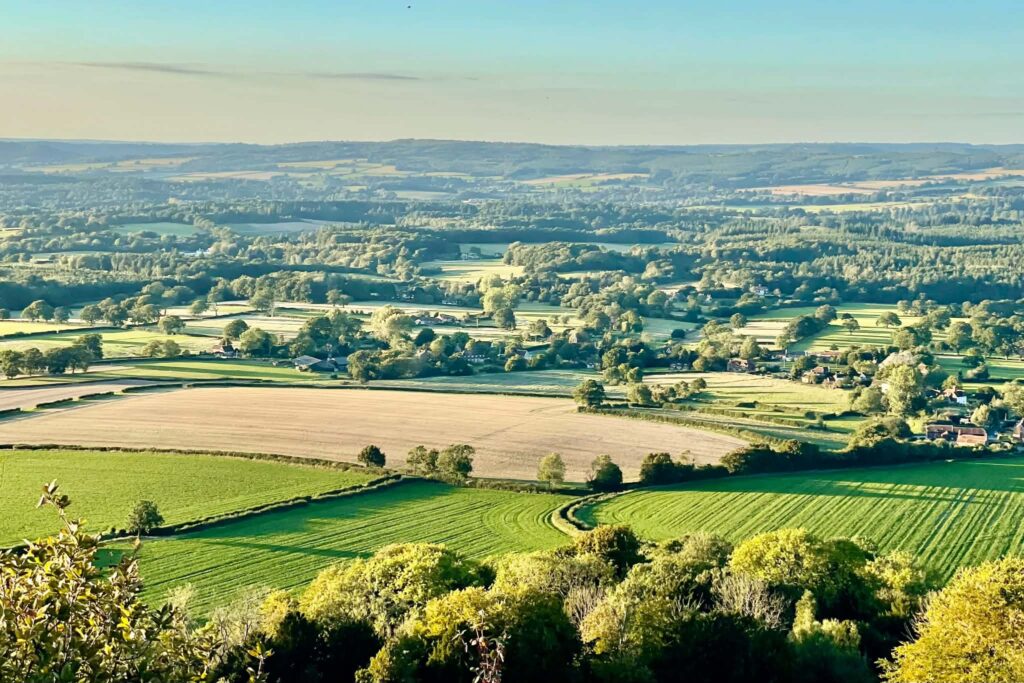
Midhurst is surrounded by beautiful countryside, including wooded hills, river valleys and picturesque villages.
Visitors can combine a day at the polo with a walk through the South Downs or extend their stay to explore more of West Sussex.
Stay a little longer
For visitors travelling from further afield, Midhurst and the surrounding area offer a range of accommodation, including hotels, traditional inns, bed and breakfasts and self-catering properties.
More Details on Accommodation
Staying locally allows you to enjoy the polo without rushing home afterwards and provides an opportunity to explore the town and countryside at a more leisurely pace.Visit Midhurst – Explore the town and surrounding area
11. Frequently asked questions
Do I need to be a member to watch polo?
No. Many Cowdray matches are open to the public. Some require tickets, while others may offer free admission. Check the arrangements for your chosen match.
Do I need to book tickets in advance?
It depends on the event. Advance booking is advisable for major tournaments and hospitality experiences. Check the club’s current ticketing information before travelling.
Can I watch polo during the week?
Yes. Matches take place on weekdays as well as weekends during the outdoor season. Consult the daily playing schedule for current fixtures.
Is polo suitable for children?
Families are welcome at public matches, and selected events offer additional family entertainment. Children must be supervised, particularly near the playing field and horses.
Can I bring my dog?
Dogs must be kept on a lead at all times. Follow any additional restrictions applying to your particular event or hospitality area.
Can I bring my own food?
Picnics are part of the traditional polo experience, although individual events and hospitality areas may have different arrangements. Private barbecues are not permitted.
Is there a dress code?
Ordinary club matches are generally informal. Major events may attract more formal dress, but practical footwear and clothing suitable for the weather are advisable.
Can I meet the horses?
Do not enter pony lines, horse transport areas or other restricted spaces. Horses may be moving between the grounds and their accommodation, so always follow the instructions of club staff.
What happens if it rains?
Polo can be affected by wet weather and unsuitable ground conditions. Matches may be delayed, moved or cancelled. Check the club’s latest playing information before travelling.
How long should I allow for a visit?
Allow at least a couple of hours for an ordinary match, including intervals and time to find your viewing position. Major events may offer a full day of polo, hospitality and entertainment.
12. Useful Links and Contact Information
Cowdray Park Polo Club
The official website is the main source of information about polo in the Midhurst area, including fixtures, tournaments, tickets and opportunities to learn the sport.
Website: https://cowdraypolo.co.uk/
Fixtures and Daily Play
Find out which matches are taking place, their starting times and the grounds being used.
Ground Maps and Visitor Information
Find the correct playing ground, entrance and access route for your chosen match.
https://cowdraypolo.co.uk/general-information/
Food and Hospitality
Information about clubhouse dining, refreshments and hospitality packages for major events.
Clubhouse: https://cowdraypolo.co.uk/the-clubhouse/
Hospitality: https://cowdraypolo.co.uk/
The History of Cowdray Polo
Discover the club’s heritage and its role in the development of British polo.
https://cowdraypolo.co.uk/about/
Explore Midhurst
Discover local attractions, places to eat, accommodation and things to do during your visit.