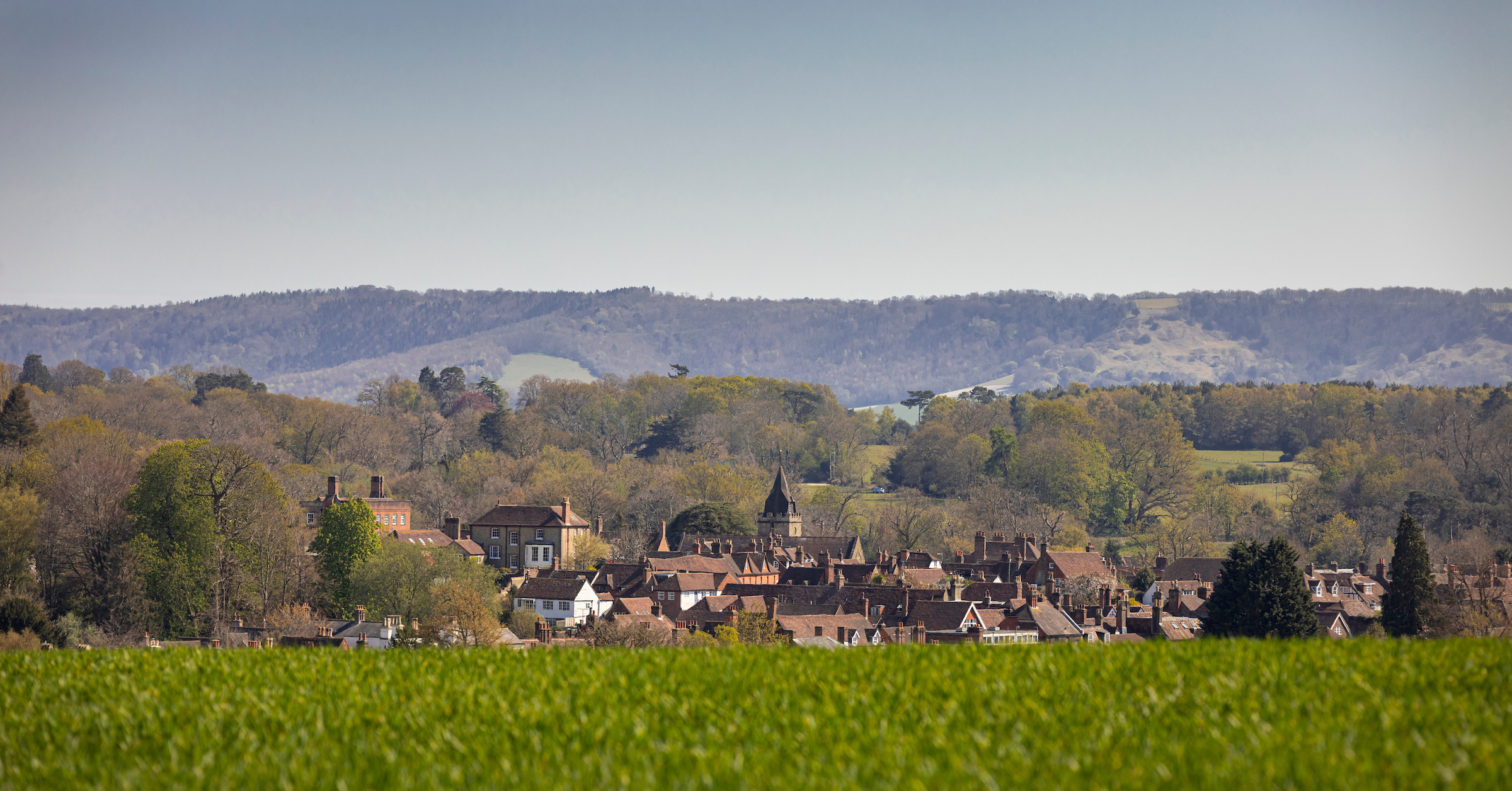


On cold winter nights, the orchards of Sussex once rang with strange cries, songs and the beating of pots and pans. Villagers gathered beneath bare apple trees, hoping to awaken them from their winter sleep and secure a plentiful harvest.


When the Apple Trees Needed Waking
Imagine a Sussex orchard in the depths of January.
The branches are bare, the ground is cold and the next harvest seems impossibly distant. Then, through the darkness, comes a procession of villagers carrying lanterns, drinking cider and making an extraordinary noise.
They gather around an apple tree and begin to sing.
This is Apple Howling, a traditional Sussex form of orchard wassailing: a ceremony intended to encourage fruit trees to produce a generous crop in the coming year.
It might sound like something from a folk-horror film. But this was a real custom, recorded in Sussex more than a century ago.
A Ceremony of Noise, Song and Cider
The ceremony took different forms across southern England, but the purpose was much the same.
Villagers gathered in an orchard, often around Twelfth Night or Old Twelfth Night in January.
They formed circles around the trees, sang verses asking for a fruitful harvest and created a tremendous commotion.
Horns were blown, pots and pans beaten, and voices raised against the winter darkness.
The noise was traditionally understood to frighten away harmful spirits, while the singing encouraged the trees to bear fruit.
In some forms of orchard wassailing, cider-soaked toast was placed among the branches as an offering associated with the spirits of the trees.
The gathering was both a celebration and a plea for prosperity.
An Old Sussex Chant
An account published in 1878 describes wassailers gathering around apple trees in the Sussex cider districts.
Their song began:
“Stand fast root,
Bear well top”
The verses went on to wish for large apples and sacks filled with fruit.
One member of the group blew a cow’s horn while the others shouted together.
The account records that failing to wassail the trees could be regarded as unlucky. Such was the strength of the belief that the prospect of missing the ceremony was itself a cause for anxiety.
This was more than an excuse for a winter gathering. For those who practised it, the orchard’s good fortune could feel intimately connected with the ritual.
Why Apples Mattered So Much
In rural Sussex, apples were not simply a seasonal treat.
They could be pressed into cider, an important drink in farming communities, while orchards were a valuable part of the agricultural economy.
The apple harvest helped sustain households and provided produce for consumption and trade.
The ceremony therefore combined older supernatural beliefs with a practical concern shared by generations of farming families: would the coming year be fruitful?
Apple Howling offered a way to confront that uncertainty together.
Pagan Survival or Rural Tradition?
It is tempting to imagine Apple Howling as an unchanged survival from prehistoric pagan ceremonies.
The ritual certainly contains elements that invite comparison with older beliefs about fertility, seasonal renewal and the natural world.
But its precise origins are uncertain.
The historical evidence establishes that orchard wassailing was practised in Sussex. It does not establish a continuous tradition dating back to prehistoric religion.
Whatever its beginnings, Apple Howling became part of the county’s rural culture, blending song, superstition, hospitality and the changing seasons.
Experience Apple Howling at Singleton
Just south of Midhurst, in the beautiful countryside of the South Downs, the Weald & Downland Living Museum offers visitors a chance to discover the customs and traditions of rural Sussex.
The museum has celebrated the old orchard-wassailing tradition with winter events featuring music, processions and the ceremonial blessing of apple trees.
Imagine standing beneath the bare branches of an orchard on a cold January day, joining in the singing and noise intended to awaken the trees and encourage a fruitful harvest.
It’s a wonderful example of how traditions once practised in Sussex villages can be brought back to life.
Wassailing is a seasonal event rather than an everyday museum activity. Check the Weald & Downland Living Museum’s website for forthcoming celebrations.
Make a Day of It
The Weald & Downland Living Museum is a fascinating destination at any time of year, with more than 50 historic buildings set among the countryside of the South Downs.
Explore traditional homes, workshops, gardens and farm buildings, and discover how people lived and worked in rural Sussex over the centuries.
After exploring, stop at the museum’s Waterside Café for coffee, cake or lunch overlooking the millpond. The café can also be visited without buying a museum admission ticket.
You could combine your visit with a walk around the picturesque village of Singleton or explore more of the surrounding countryside before returning to Midhurst.
Getting to Singleton from Midhurst
By car: The museum is approximately eight miles south of Midhurst, reached via the A286 towards Chichester and Town Lane in Singleton. Allow around 15–20 minutes for the journey.
Parking: The museum has its own visitor car parks, including a free car park a short walk from the entrance. Accessible parking is available closer to the museum buildings. Follow the signs when arriving.
By bus: The Stagecoach number 60 runs between Midhurst and Chichester, stopping at Grooms Yard in Singleton. From the bus stop, the museum is approximately five minutes away on foot. Check the latest timetable before travelling.
Address: Weald & Downland Living Museum, Town Lane, Singleton, West Sussex, PO18 0EU.
For admission information, accessibility and current visiting arrangements, see the museum’s official visitor guide.
Take the Midhurst App With You
Use Visit Midhurst to plan your day, then take the Midhurst App along as your local companion.
Discover other historic places, countryside attractions, walks, cafés and traditional pubs around Midhurst and the South Downs.